
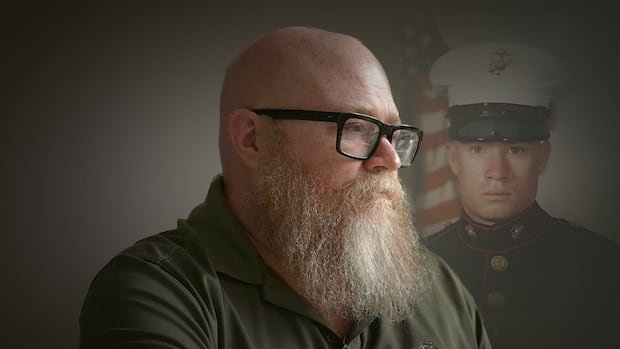
On September 11, 2001, Barry Sward, a senior at a high school in Woodbridge, Virginia, witnessed the collapse of the twin towers on television and felt affirmed in his decision to join the U.S. Marines. Motivated by a sense of national tragedy, he felt a strong desire to combat the perceived enemy responsible for the attacks.
In July 2002, Sward commenced basic training at Parris Island, South Carolina, and shortly thereafter was deployed to Iraq as part of President George W. Bush’s “war on terror.” Following the events of September 11, 2001, a 2019 Pew Research survey of 1,284 veterans revealed that post-9/11 veterans were approximately twice as likely to have served in combat zones compared to those who enlisted earlier. Consequently, they were more prone to experiencing both physical and mental wounds from the battlefield.
Despite encountering emotionally distressing situations, only a third of the respondents sought assistance to cope with their experiences. In August of the current year, journalist Adrienne Arsenault revisited Sward in Falmouth, Virginia, 24 years after their initial interview. Reflecting on his journey, Sward acknowledged that his deployment to Iraq had significantly impacted him, leading to a back injury and a diagnosis of post-traumatic stress disorder (PTSD).
In the aftermath of the September 11 attacks, there were reports of an upsurge in patriotic individuals enlisting in the military to defend their country. However, Jason Dempsey, an expert in American civil-military relations at Columbia University, emphasized that the surge in recruits post-9/11 was a temporary phenomenon and not the predominant trend.
Contrary to popular belief, data from the primary military branches did not show a substantial increase in enlistment immediately following September 11 compared to other periods. Dempsey highlighted that individuals typically joined the military due to familial ties, seeking financial stability or educational prospects, or enlisting during times of high unemployment.
Notwithstanding their reasons for enlistment, post-9/11 veterans participated in prolonged conflicts in Afghanistan and Iraq, with the latter witnessing the recent official withdrawal of U.S. forces. Sward’s unit, the 2nd Battalion, 8th Marines, was deployed to Iraq in March 2003 as part of the global war on terror, engaging in the Battle of Nasiriyah where several marines, including Sward’s friend from basic training, lost their lives.
While on duty, Sward’s unit was tasked with patrolling the city for leadership and evidence of weapons of mass destruction, based on unverified U.S. intelligence. Despite the lack of evidence supporting the claims, the invasion proceeded, leading to lasting repercussions and complexities for those involved. Post-9/11 wars have come under scrutiny for achieving their intended goals, with a significant portion of veterans expressing doubts about the wars’ worthiness.
Sward’s military service in Iraq was curtailed due to chronic back pain, leading to his eventual discharge from the Marine Corps. It took 14 years for him to receive a PTSD diagnosis, attributing his symptoms to anger and emotional challenges. With the support of his wife, a licensed psychotherapist, Sward embarked on a journey towards healing and addressing his trauma.
As the years passed, Sward became more open to confronting his inner struggles and seeking resolution. Despite the hardships he endured, he remains proud of his military service but refrains from encouraging his children to follow in his footsteps. Today, he cherishes his family and the life he has built, acknowledging that his choices have led him to a place of contentment and fulfillment.

