
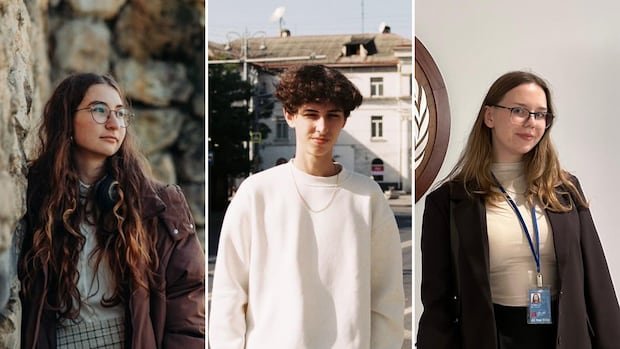
Growing up in Crimea while it was under Russian control, Matvii Chos lived in fear of being conscripted into the Russian military once he reached adulthood. To avoid this fate, Chos, now 19, enrolled at a university in Moscow and later managed to escape Russia with the assistance of a Ukrainian non-profit organization.
Chos recalls the early signs of brainwashing and militarization, dating back to his time in sixth grade in 2020. He describes how they were subjected to specialized cadet classes where they were trained in various military skills such as weapon handling, marching, and tactical medicine, all aimed at grooming them into future soldiers to fight against their fellow Ukrainians.
According to Chos, Russia’s actions involve occupying territories, abducting children, and transforming them into Russian soldiers. This indoctrination and forced military training are not unique to Chos but are shared experiences among many Ukrainian youth in regions controlled by Russia, raising concerns among human rights experts due to the vulnerability of children.
The imposition of Russian culture and values on young Ukrainians is evident in various ways, as explained by individuals like Daria Fursova, who witnessed changes in the school curriculum following Crimea’s annexation by Russia in 2014. The transition included the removal of Ukrainian language and literature from schools, replaced with Russian history and language instruction.
Speaking Ukrainian or Crimean Tatar was prohibited, even during breaks, as noted by Daria Tomashova, stressing that the indoctrination was pervasive, extending from school textbooks to television broadcasts. The shift towards Russian cultural elements became more pronounced following the occupation.
The international community has expressed particular concern about Russia forcibly separating tens of thousands of Ukrainian children from their families and relocating them to Russian territory, a situation described by Ukrainian President Volodymyr Zelenskyy as “mass kidnapping” and potentially constituting genocide.
Ukrainian officials estimate that around 20,000 children have been unlawfully deported to Russia since the start of the invasion in February 2022, with only a fraction returned so far. These actions have led to charges against Russian President Vladimir Putin and Children’s Rights Commissioner Maria Lvova-Belova at the International Criminal Court.
Efforts are underway, including Canada’s commitment of nearly $7 million to support organizations aiding in the return and rehabilitation of Ukrainian children affected by the indoctrination and militarization efforts by Russia. Organizations like Save Ukraine play a crucial role in identifying and rescuing abducted children.
The urgency of the situation is emphasized by Mykola Kuleba, the founder of Save Ukraine, who stresses the need for prompt action to prevent further harm to the children, many of whom are now caught in the conflict as soldiers. The ultimate desire of these children is to return to a normal life with their families in their hometowns.
Despite the challenges, some, like Matvii Chos and Daria Tomashova, have managed to escape and share their harrowing experiences, highlighting the ongoing struggles faced by many children still in peril. Their stories serve as a reminder of the ongoing crisis affecting Ukrainian children in conflict-affected regions.

