
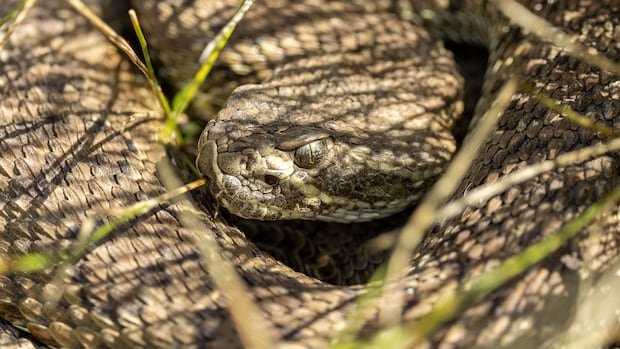
It has been a bustling period for the resident rattlesnake handler in Lethbridge. Responding to the majority of calls from a hotline managed by the City of Lethbridge, Ryan First Diver aids residents worried about snakes on public premises. The city’s established rattlesnake mitigation initiative relocates snakes from public areas to their natural habitat, including den sites, wintering grounds, or birthing locations.
Up to Thursday, 211 snakes had been relocated this year, encompassing rattlesnakes and similar-looking non-venomous bullsnakes. This number marks an all-time high, as disclosed by First Diver to CBC News. The city typically receives around 150 to 160 calls annually, as noted by City of Lethbridge senior bylaw officer Dave Henley, who is also actively involved in addressing such calls.
First Diver mentioned that community awareness regarding snakes has significantly increased over the years, partly due to his social media posts on the subject. This heightened awareness has led residents to be more vigilant and knowledgeable about snakes, spreading information online to educate others.
Residents in Lethbridge can contact the city’s hotline at 403-332-6806 if they encounter a snake. First Diver emphasized that rattlesnakes are often misunderstood, clarifying that they are not inherently aggressive creatures. He highlighted the importance of remaining calm and maintaining distance when encountering a snake, as they typically avoid confrontation unless provoked.
Stefano Liccioli, a senior species-at-risk biologist, emphasized that while rattlesnakes are venomous, no fatalities have occurred in Alberta due to rattlesnake bites. He dispelled misconceptions about rattlesnakes’ aggressiveness, stating that they usually strike when cornered or threatened, rather than as an act of aggression.
The increasing number of snake-related calls in Lethbridge could indicate a rise in the local snake population, as suggested by Liccioli. Efforts are underway to study and monitor rattlesnake populations in Alberta, with the use of small transmitters to track snake movements and identify den locations. Liccioli anticipates obtaining comprehensive data on snake population trends in Alberta within the next decade to inform conservation strategies and protection measures.

