
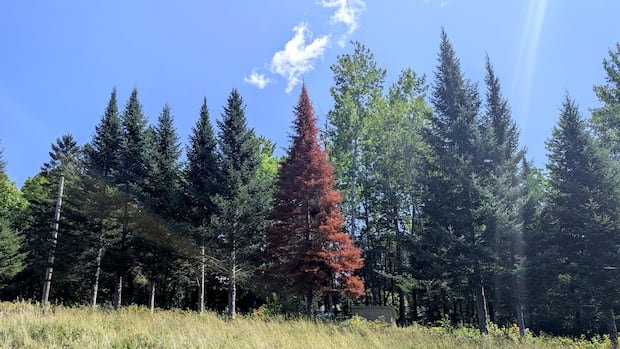
Balsam fir trees in New Brunswick are undergoing a concerning transformation, with many turning red and perishing due to the severe drought experienced last summer. Prof. Anthony Taylor, a forestry researcher at the University of New Brunswick, has been closely monitoring the situation. The once vibrant evergreen trees, often sought after for Christmas decorations, are now withering away as a result of the prolonged dry spell.
According to Prof. Taylor, the current scenario aligns with previous instances following hot and dry summers, indicating that such conditions hinder the growth of balsam firs. He emphasizes that warm and dry weather negatively impacts the trees’ ability to thrive.
Over the years, Taylor has dedicated his research to studying the impact of climate change on New Brunswick’s forests. He notes that similar instances of balsam fir die-offs occurred after unusually scorching and dry summers in 1986 and 2018. The trees are reacting to the drought by halting the photosynthesis process prematurely, hindering their growth and energy production.
The shallow root system of balsam firs exacerbates the situation, making it challenging for them to access sufficient water during dry periods. Peter McKeil, a woodlot owner, has witnessed firsthand the distressing effects of the drought on his trees. He has observed the gradual reddening of the lower branches, indicating ongoing damage and potential further losses.
McKeil estimates that around 100 trees on his property have already succumbed to the adverse conditions. Though he has salvaged some of the deceased trees for lumber, he is adjusting his harvesting practices to maximize the remaining fir trees’ value before they too perish. Expressing concerns about the future of the species in southern New Brunswick, McKeil believes that climate change poses a significant threat, potentially dooming the balsam firs in the region.
Prof. Taylor views the current situation as a stark reminder of the urgent need for climate action. While the red trees serve as valuable indicators for his research, they also signify the detrimental impact of climate change on New Brunswick’s iconic tree species. He stresses the importance of transitioning away from fossil fuels and adopting sustainable practices to mitigate climate change’s effects on forests and biodiversity. Taylor hopes that his findings will prompt societal change and accelerate efforts to combat climate change for the preservation of the environment and its ecosystems.

