
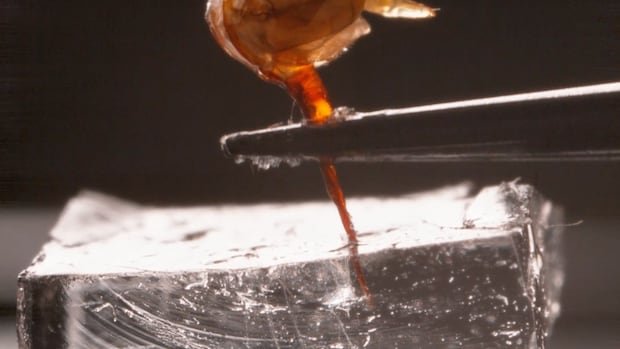
A western honey bee’s stinger is a final defense mechanism that injects venom upon contact, often leading to the bee’s demise. Recent research in the Proceedings of the National Academy of Sciences sheds light on the effectiveness of this mechanism. Fiorella Ramirez Esquivel, a postdoctoral researcher at Macquarie University, highlighted the significance of modern camera technology in capturing the bees’ stinging action.
To observe the rapid bee stings, high-speed cameras capturing hundreds of frames per second were utilized. The transparency of the venom sac and stinger enabled detailed visualization under strong lighting conditions. Live honey bees were used in experiments, with their stingers removed and the bees euthanized shortly after to study the stinging process within a limited timeframe.
The study revealed a unique double-piston design in the stinger, with specialized valves facilitating both deeper penetration and continuous venom delivery. This intricate mechanism was compared to a car engine, emphasizing the complexity of the stinging process. Researchers utilized 3D printing to recreate the valve movements and understand the fluid dynamics during the stinging action.
Juliana Rangel, an apiculture professor at Texas A&M University, commended the study for providing insights beyond conventional microscopy images. The study highlighted the prolonged activity of the stinger after release, with twitches and movements lasting up to 15 minutes. The stinging behavior of honey bees serves a vital role in protecting the colony, showcasing the evolution of a sacrificial defense strategy.
The article also discussed the social nature of honey bees and the role of pheromones in recruiting other bees during defense. The study’s findings raised potential implications for medical applications due to the continuous venom flow mechanism. Lauren Ponisio, an ecologist at the University of Oregon, pondered the absence of stingers in other honey-producing bees and the evolutionary advantages of different bee species.

