
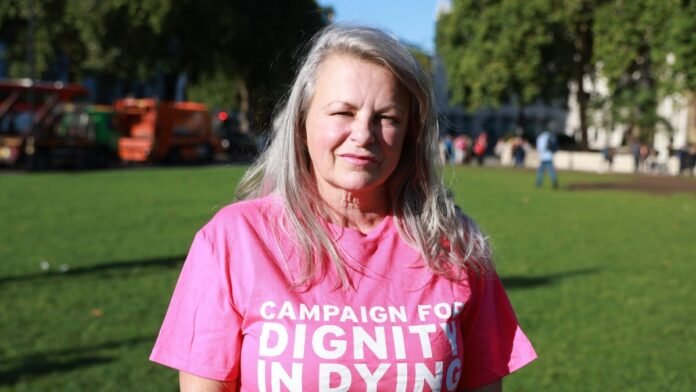
A woman who faced police scrutiny for accompanying her husband to Dignitas is calling on legislators to ensure that assisted dying is accessible to all, not just the wealthy. Louise Shackleton, who waited 10 months for confirmation that she wouldn’t be prosecuted for her husband’s assisted death in Switzerland, is appealing to members of the House of Lords as they review a proposed bill granting the right to die in England and Wales.
Emphasizing that assisted dying is already an option for the affluent who can afford to travel to countries like Switzerland and Belgium, Mrs. Shackleton highlights the disparity in access. She stresses the importance of extending this choice to all individuals, not just the privileged few, citing it as a matter of societal equity.
Reflecting on her late husband Antony’s battle with motor neurone disease, Mrs. Shackleton shared the touching contents of a letter he left for her, expressing gratitude for her support and sacrifice. She praised his loving words and noted his uncharacteristic openness in the letter, underscoring his kindness and care for others.
While acknowledging their ability to afford the trip to Dignitas, Mrs. Shackleton insists that the right to die should be a universal right, not limited to those with financial means. The proposed legislation, allowing terminally ill adults with less than six months to live to seek an assisted death, is facing scrutiny in Parliament, with concerns raised about its potential impact and implementation.
The bill, which has advanced further in Parliament than any similar legislation, includes safeguards such as approval by medical professionals and a panel of experts. If passed into law, it would require agreement from both the House of Commons and House of Lords, with a potential implementation timeline extending to 2029/30.
Mrs. Shackleton criticized the current law as oppressive, arguing that individuals should have the right to end their suffering without state interference. The ongoing scrutiny of the bill involves hearings with medical and legal experts, including key figures who previously opposed the legislation.
Authorities confirmed that no charges would be brought against Mrs. Shackleton following the investigation, citing a lack of grounds for prosecution. The Crown Prosecution Service echoed this decision, stating that the legal threshold for prosecution was not met, leading to no further action.
For emotional support, individuals can contact the Samaritans helpline or visit their website.

